Affiliate Disclosure: This site may contain affiliate links. When readers purchase through these links, we may earn a commission at no additional cost to them.
Diamond Sharpening Stone vs Whetstone: Which Is Better for Beginners?
Diamond stones are fast and stay flat. Whetstones usually feel smoother and can be more pleasant for kitchen knives. Neither is automatically better for every beginner; the right choice depends on repair work, maintenance tolerance, and how you want sharpening to feel.
Decision Table
| Factor | Diamond Stone | Whetstone |
|---|---|---|
| Speed | Fast steel removal. | Usually slower, especially on soaking stones. |
| Angle control | Still requires steady hands. | Also requires steady hands, but feedback can feel smoother. |
| Maintenance | Stays flat with little upkeep. | Needs flattening as it wears. |
| Best knife fit | Very dull knives, harder steels, repair work. | Routine kitchen knife maintenance. |
| Common mistake | Removing too much steel too quickly. | Polishing before the edge is actually sharp. |
Choose Diamond If
- You want a flat surface with very little maintenance.
- You need to repair dull or damaged edges quickly.
- You sharpen harder steels or want one plate that works across tools.
Choose a Whetstone If
- You mainly sharpen kitchen knives.
- You want smoother feedback while learning.
- You are comfortable soaking or flattening the stone when needed.
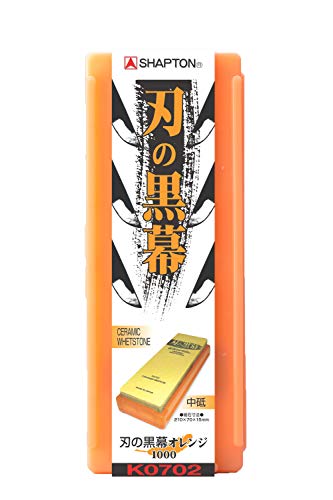
Shapton Kuromaku 1000 Whetstone
A splash-and-go 1000 grit stone often recommended as a serious first stone for kitchen knives.
Beginner Verdict
If you want the lowest-maintenance abrasive, look at diamond. If you want a traditional first sharpening stone for kitchen knives, a good 1000 grit whetstone is still the cleaner starting point.
Common Mistakes
- Using a coarse diamond plate for routine touch-ups and removing more steel than needed.
- Buying a fine polishing whetstone before learning to sharpen on a medium grit.
- Assuming a diamond stone fixes angle control. It stays flat, but your hands still set the angle.
- Letting a whetstone dish badly and then blaming the knife for uneven results.
When to Stop
Stop sharpening when you have raised and removed a burr and the knife cuts paper or tomato skin cleanly. More passes are not automatically better. If the knife has chips, a thick shoulder, or damage near the tip, a beginner stone session may not be the right repair method.